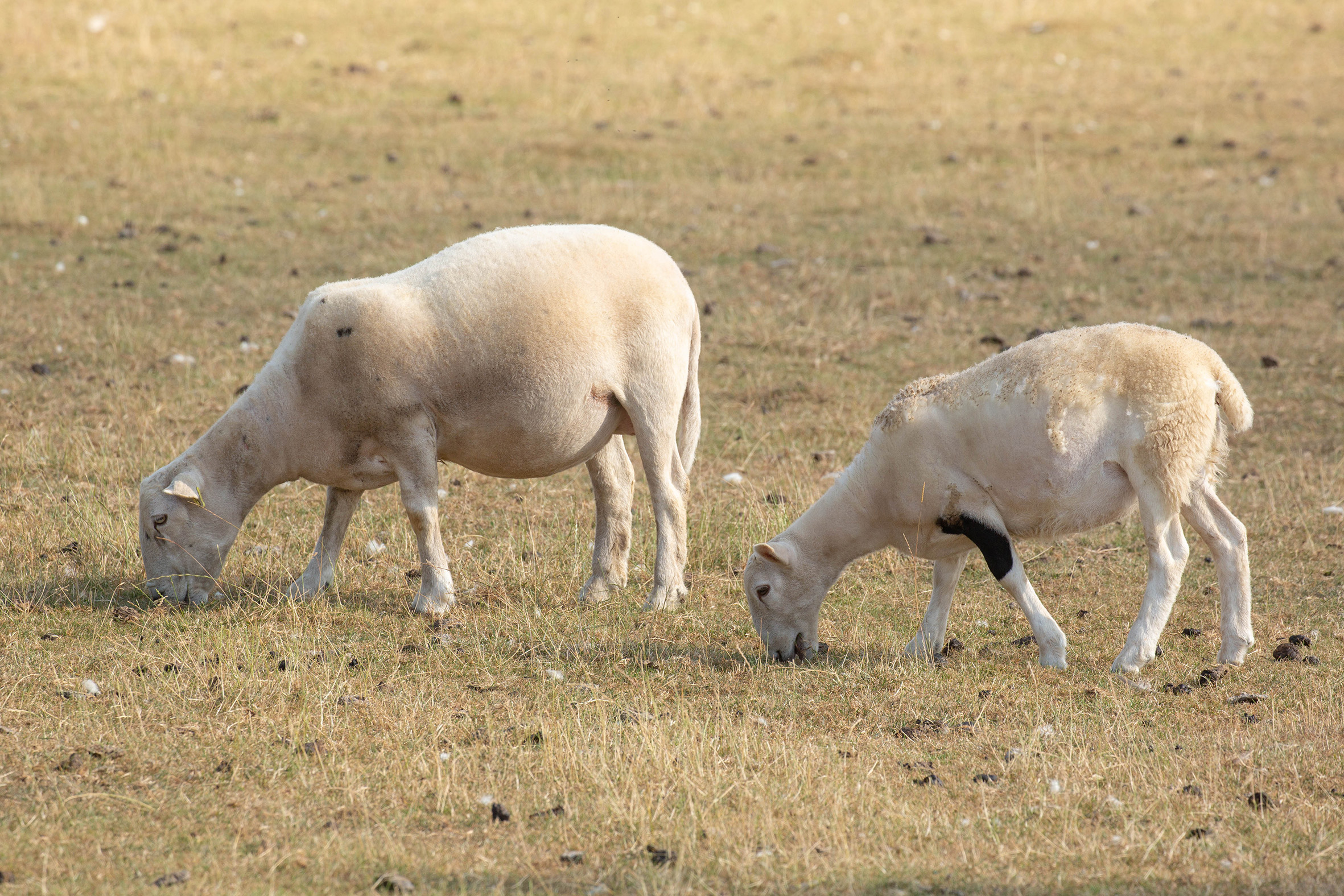
SHEEP farmers are being encouraged to focus on nutrition and rumen health in the run-up to tupping following challenging summer conditions which may have affected the quality and availability of grazing.
Dr Alison Bond, Technical Services Manager at animal nutrition company Rumenco, says appropriate supplementation could help ewes recover condition lost over the summer and make better use of available forage.
Farmers will generally be aiming for ewes to reach a body condition score of between 3.0 and 3.5 by the time tups are introduced, depending on the farming system.
Dr Bond said feeding strategies which support the microorganisms within the rumen could improve the efficiency with which sheep use their available feed.
She recommends the company’s Rumevite Sheep Super block as one option for supplementing grazing or conserved forage.
Rumevite Sheep Super includes urea, which is used by the rumen microorganisms to produce microbial protein, she explained.
This is a very efficient way of providing true protein and can reduce the ewes’ reliance on protein from other sources.
The supplement also contains soya and rapeseed protein, alongside energy provided through starch, sugar and protected fats.
Dr Bond said its free-access format allows sheep to consume the supplement little and often, helping to maintain a stable rumen environment and potentially allowing animals to regain condition more effectively.
She said this year’s difficult summer had also increased the importance of considering whether ewes were receiving adequate vitamins, minerals and trace elements.
“Short supplies of poor-quality forage may have left ewes short of vitamins, trace elements and minerals, so providing adequate supplies through supplements such as Rumevite Sheep Super may well help to avoid problems further down the line,” she said.
Fish oil, providing omega-3 fatty acids, is also included in the formulation to support fertility during the important pre-tupping period.
According to Rumenco, studies involving Rumevite Sheep Super have shown increases in live lambing percentages of up to 22 per cent when compared with unsupplemented ewes.
Dr Bond said getting ewes into the appropriate condition could support ovulation and increase the likelihood of animals holding to service during their first cycle.
With heat and drought conditions having continued into August in parts of the country, farmers will now be hoping rainfall provides an improvement in grass growth.
However, Dr Bond warned against relying entirely on a late-season recovery in grazing.
She said: “To ensure that later summer grass growth isn’t too little, too late, it’s all the more important to supplement the ewes in advance.
“This will help to ensure that ewes are primed with an efficient rumen and are best able to utilise forage.”