You will have read previously about the incredible fundraising success that permitted Bute Arts Society to buy a new grand piano.
Whilst the loaned grand piano awaits its return to the Pavilion, there was a unique opportunity for a concert to both showcase the new instrument and to allow for piano duets.
Thus, Bute Arts was able to welcome Nikita Lukinov for this special event before his forthcoming tour of China.
Nikita is a favourite of the society and this was his fourth concert on the island.
He is an energetic and dramatic performer so who better to demonstrate what could be achieved with the fabulous new grand piano.
Nikita also brought along friends from the Royal Conservatoire of Scotland.
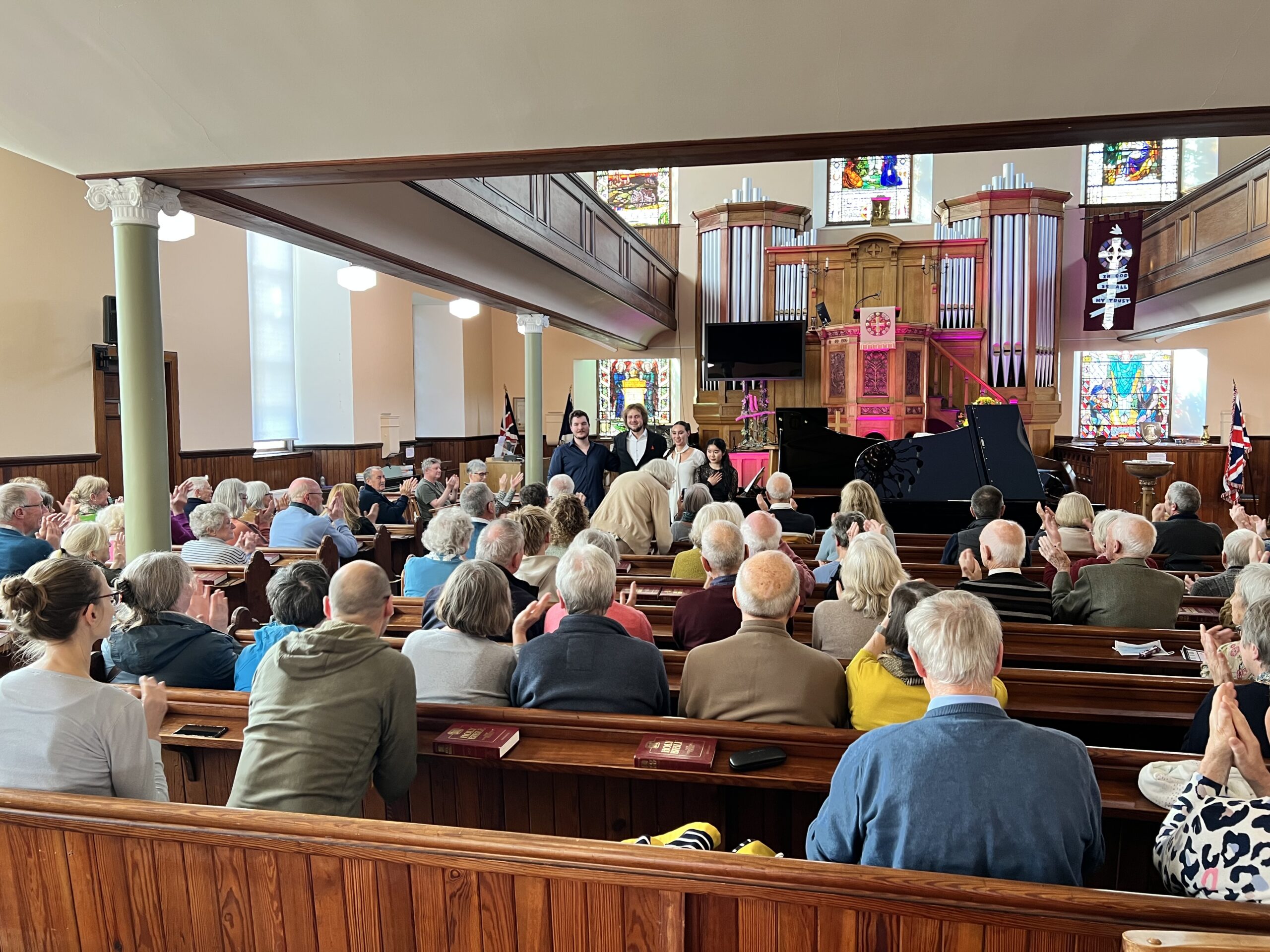
As the pianos and concerts are held at the Parish Church of Bute, the reverend Sybil Tchaikovsky officiated with a reading from the Book of Revelations and an inspiring dedication of the new piano.
Nikita began with excerpts from the ‘Nutcracker’ Concert Suite by Tchaikovsky, beginning with the crisp precise staccato of the March followed by the delicacy of the very well known Dance of the Sugar Plum Fairy, bringing the daintiness of fairy dancing to the higher register of the piano.
Next came Tchaikovsky again and pieces from the Sleeping Beauty concert suite.
The enchanting Adagio featured cascades of notes in keyboard runs and glissandos that brought almost every key to life.
Red Riding Hood and the Wolf added humour and charm to the selection.
Nikita then played the Six Pieces from Cinderella Op.102 by Prokofiev.
As a more modern piece, there were moments of unexpected dissonance, unusual for ballet music but a characteristic feature of early 20th century classical music.
The lyrical characters of Cinderella and the Prince flowed through the waltz; a masterful attacking performance emphasised The Quarrel, then a gentle tripping melody and jolly rhythmical elements enlivened the Pas-du-Chale.
The Amoroso gave tender swelling emotions to conclude the suite.
At times there were striking similarities to Prokofiev’s contemporary Shostakovich, including the jazz motifs that they both utilised.
The whole first half was an awe-inspiring masterclass from Nikita who fully demonstrated the capabilities of this excellent piano.
After the interval, the spectators were entertained by Anastasia Maria Barbu.
Her performance was equally passionate and also delivered great emotional depth in a beautifully refined style, wringing lingering sensitivity from the music and showing the piano in different moods.
Her program began with Etude Op. 8 No. 9 by the Russian composer Alexander Scriabin, which has been described as a struggle between hope and despair.
This was followed with works by two modern Romanian composers, firstly from George Enescu, the Pavanne from his Suite No. 2.
The inspiration for this work is based on a feeling of longing for somewhere.
It was played with a deeply felt delicacy, the musical themes were very fluid, conjuring a flowing sound reminiscent of a river.
Then her final solo, the Bacannale by Constantin-Nicolae Silvestri.
Named after the god Bacchus, this wild party piece demanded frantic finger work and powerful, almost tortured, hand shapes to create this spirited performance.
Next the large, enthusiastic audience enjoyed the first of the works performed on the two grand pianos.
This is such a rare treat only occasionally seen in large concert halls and conservatoires hence the wonder of it on a small Scottish island.
Nikita and Anastasia performed on the two Yamaha pianos, playing as one magnificent sound box, with one of Saint-Saens masterpieces Danse Macabre Op 40 delighting the audience with a work best known as the theme tune for the ‘Jonathan Creek’ television series.
This frequently fast and furious composition tells of death calling forth the dead on Halloween to dance for him; with the two pianos, the dance leapt from one to the other enhancing the vibrant dynamics of the piece.
Composer and performer Ivan Varchenko changed the mood by introducing a piece on piano, a tender improvisation he described as unfiltered emotion dedicated to his aunt who had died recently.
He then switched to a 100-year-old Selmer saxophone borrowed for the occasion and he and Nikita played two incredible works by Astor Piazzola, Libertango, featuring a fabulous swaying dance from the sax graciously underpinned by the piano, and Oblivion where a driving piano rhythm accompanied the intense Latin sway and passion of the piece.
They then improvised a duet of the well loved standard Somewhere Over The Rainbow.
Anastasia returned to the keyboard along with Annabel Sung for an arrangement by Percy Grainger for eight hands on two pianos of An English Country Garden, an old English folk tune used for morris dancing.
It became a pop song in the sixties and is an iconic tune.
This quaint novelty was obviously enjoyed by performers as much as the audience.
Nikita had crafted an excellent program with something for everyone and all manner of styles contributed to really celebrate the new piano.
This was a free concert and afterwards everyone was invited to a reception where there was an opportunity to talk to the performers, all of whom have a special fondness for Bute.
The event was made possible by very generous support from For Bute, Bute BID and Visit Bute.
A review by Janet Bentley