THE BUTE Arts Society audience were greeted by a pathway of lanterns and autumn leaves as they made their way into the auditorium for a concert of Nordic Unrest.
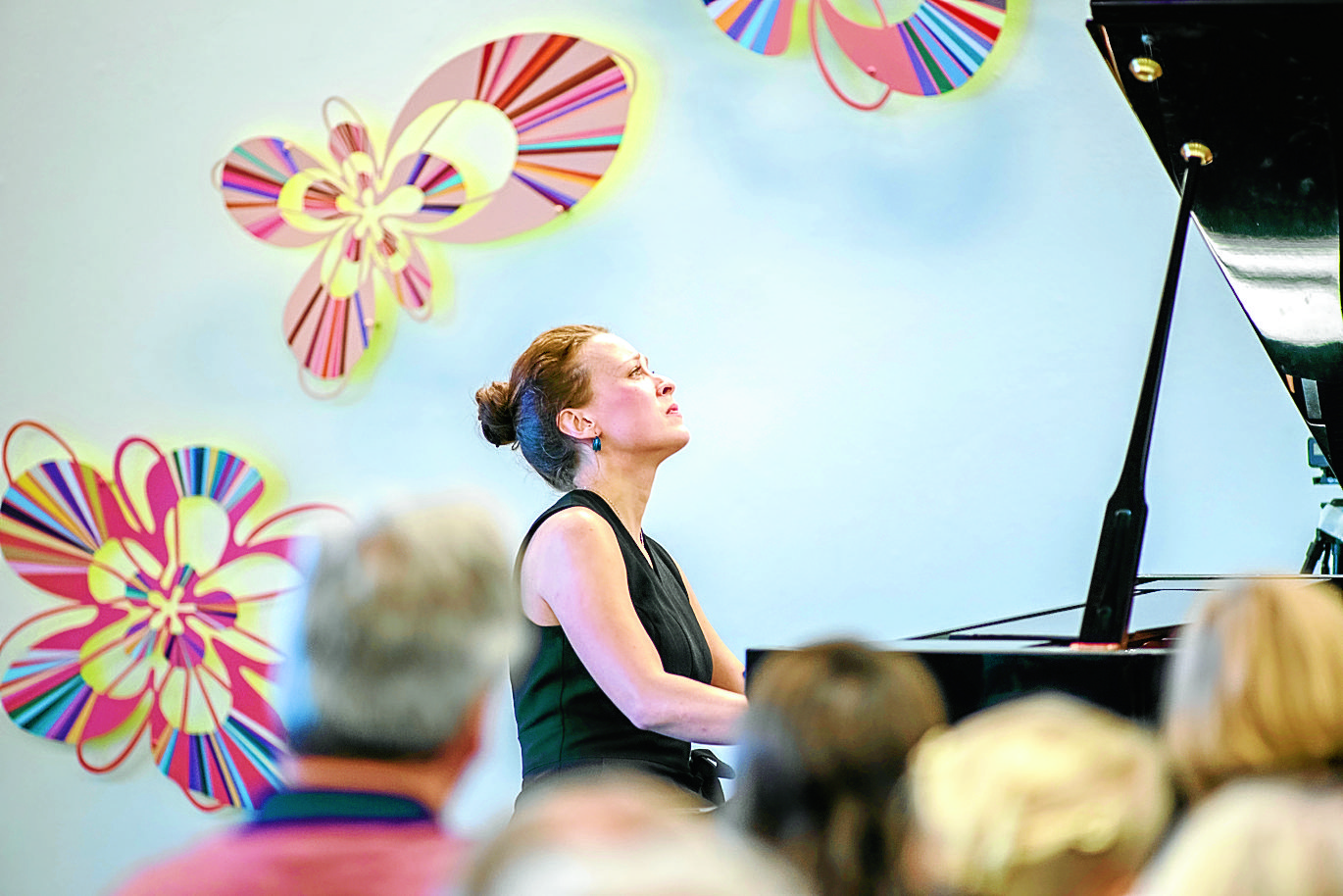
Norwegian pianist and renowned international performer, Oda Voltersvik, thrilled the audience with her piano recital as Bute was privileged to be the latest venue of the promotional tour for Nordic Unrest, her third solo album.
The evening began with pieces by Edvard Grieg, perhaps Norway’s most famous composer.
He often made use of Norwegian folk music and this set the evening’s themes of folklore, nature and mystery.
From his collection of Norwegian Folk Songs and Dances Op. 17, Oda played No. 12 Solfager and the Snake King highlighting the sense of melancholy in the despair of Solfager’s captivity.
This piece was written after the death of Grieg’s only child and his emotional loss comes to the fore in both the work and Oda’s interpretation.
Next a change of mood, from Lyric Pieces Op. 54, No. 3 the March of the Dwarves energetically romped along, describing characters from folklore.
The vibrant, animated performance conjured lively cheerful dwarves.
From Lyric Pieces Op 43, no. 6 To Spring was a delicate piece, Oda said that it represents ‘the poetic uncertainty of the season’.
It was certainly symbolic of nature’s awakening with gentle notes peeping out like emerging new growth.
The last of Grieg for now, was EG. 110. Tempest Clouds. Again, a very descriptive piece of billowing musical clouds rolling around the keyboard, gathering an increasingly dominant bass as the sounds of the gathering storm were topped with blowing runs of notes and emphatic chords.
The next pieces were by Agathe Backer Grondahl, a Norwegian pianist and composer, a friend of Grieg, who had played his famous Piano Concerto in A Minor with Grieg himself conducting.
Oda played the sweetly flowing no. 2 Allegretto leggiero in A flat Major from 4 Sketches Op19; the elegantly delicate Song of the Roses from Fantasies Op 39; the cheerfully light footsteps of Spring Dance, no. 6 of the Norwegian Folksongs and Folkdances Op 33, and finally the joyfully celebratory Allegro no.1 from 3 Etudes de Concert Op. 32.
Oda’s next selection was from Norwegian composer and music critic Pauline Hal, who was influenced by French impressionism and wrote for television, film, ballet and the theatre.
The audience was treated to the Four Piano Pieces, Op1, a work influenced by Claude Debussy.
Firstly the mystical and brooding Traum Durch die Dammerung (Dreaming Through the Twilight); then the languorous and moody Erotik; a playful Vals and concluding with a rich and plush Scherzino.
As well as very expressive playing, Oda is highly proficient technically having an unusual hand positioning style.
After the interval there was a shift to even more contemporary music by the Icelandic composer Alti Heimir Sveinsson.
A modernist, he was the first Icelandic composer to be influenced by Stockhausen and John Cage.
Coming from a country with no great musical tradition, he was free to try to capture the spirit of Iceland.
His work,Odur Steinsins (The Song of the Stone, 1983) is based on an epic poem, verses of which he selected to illustrate sonically with passionate and diverse musical forms to illustrate the greatness of nature in Iceland, its folkloric sensibilities and the impact they have on the Icelanders.
it was definitely something completely different.
During the performance, there was a digital display of the chosen verses translated into English and paintings by artist Karina Skilbrei, inspired by the poetry and music.
Starting with a building repetition, the otherworldly Maestoso set down a strong statement, then the gentle Amoroso e Cantabile almost like a lullaby called for a very delicate touch evoking a sense of light creeping in at dawn.
A remarkable volte face next with the Con Anima (Nocturno) when, according to the poem ‘The stone is freed from its spell’ , with sparse disjointed and unexpected dissonance.
Oda reached into the piano to pluck strings and run glissandos on them, what next?
The following Flebile verse had contrasting elements of flowing melodies, dramatic then peaceful as if to settle the music back to a harmonic state.
The Appasionato was a commanding piece, a rhythmical rolling thunderstorm that was left echoing and fading.
The piano was no longer just a musical instrument but a fascinating generator of entrancing sound effects.
The Amoroso was again unconventional with icy notes depicting the winter flowers blossoming.
A quirky shimmering Brilliante lead to the Quieto, where a mystical force seemed to be exploring the keyboard.
Next the Excessive Rubato leapt around the keyboard, sprinkling delicate fragments of music.
The rhythmical pulsating Rigoroso gave way to the majestic Agitato soundscape that represented elements of earth and sky.
Suddenly the sound, trapped by the startlingly forceful closing of the piano lid on the keyboard, caused the sound to rumble inside until it faded, before the keyboard was again revealed and the piano brought back to life.
Admittedly this work was not for everyone, such a bold and challenging piece never would be, but those who were open to it were taken on a sonic rollercoaster of emotions by a stellar performer who gave everything to the recital.
The final work of the evening was again by Grieg.
The Ballade in G Minor Op 24 based on variations of a Norwegian folk song, was written at a difficult time for the composer.
The soulful piece often displayed a melodic anguish, some passages were emotionally exposed and incredibly demanding of the performer.
There were moments of brightness but they resolved to sad brooding echoing through the piano, frantic dancing phrases manically rushed to reinstate the melody.
A return to the dance rhythm again built hopefully then a final release of emotion before a peaceful finale.
Oda Voltersvik is to be congratulated on a magnificent performance and on the brave choices that she crafted into an exceptional program.
It is so pleasing that Bute Arts continue to expand our musical experiences like this.
The newly released album, Nordic Unrest, contains the works by Greig and Sveinsson and is highly recommended.
A review by Janet Bentley