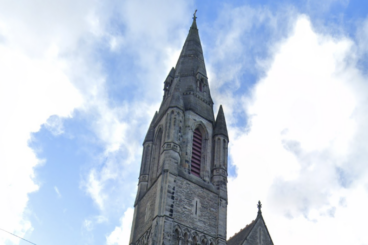
THE future of one of the town’s most iconic buildings, St John’s Church, currently hangs in the balance as options over its prospects are being considered.
As reported in this newspaper last month, Cowal Kirk congregation is reviewing the viability of all of its buildings, as uncertainty grows over the future of their local churches.
The Church of Scotland (COS) confirmed that Cowal Kirk is going through a significant time of change and the congregation has been working with the Church’s property arm, the General Trustees, to examine the viability of their buildings.
However, in a recent newsletter distributed to members of Cowal Kirk, the Reverend Everisto detailed two options currently being considered and warned that tough decisions now lie ahead.
He explained: “Our preferred first option is keep St John’s as existing and use as Cowal Kirk centre of worship, this is to include the sale of Kirn and Sandbank church and grounds, retention of High Kirk Hall as a hall, and retention of Toward and Innellan Church and Hall.
Our second preferred option is Kirn and Sandbank Church to be used as Cowal Kirk centre of worship, this is to include the sale of St John’s church and grounds, the sale of Toward Church and Hall and the retention of the High Kirk Hall as a hall.”
He added: “I know this news may come as a shock, and I’m sure you will have many questions and concerns, but I want to assure you that we will communicate clearly and often as we navigate this process.”
Cowal Kirk, a registered charity, brought together five churches into a single united congregation in April 2021: St John’s, Kirn & Sandbank, the High Kirk, Innellan and Toward.
This union was then reduced following the sale of Innellan Church later that year and then the High Kirk in Dunoon last year.
In January, this newspaper reported that Cowal Kirk was more than two years overdue in submitting its annual report and accounts to Scotland’s charity regulator, OSCR. It’s understood those documents have still yet to be filed.
The pressures of bringing together five churches into one congregation was cited as a reason for the delay.
A local resident, who wished to remain anonymous, contacted this newspaper and expressed their deep concern about the options Cowal Kirk now faces.
They explained: “The recent Trustees’ writings include a very flawed assessment about St John’s church. This includes misleading comments about costs. There is no recognition that St John’s Church includes an excellent hall, perfect in size, as well as rooms. This renders the need for other halls, such as Hanover Street, unnecessary.
There was also no recognition that it is the only Church of Scotland building left in Dunoon, since we have already lost the High Kirk. This is fundamental.
No recognition of the regular use of the building by community groups such as Cowal Choral Club, Cowal Music Club, and many others.”
They added: “St John’s is essential for large gatherings, like weddings, funerals, choir concerts, and schools visits, while its hall can also be used in tandem with large attendances.
But the Edinburgh Trustees appear to be condemning St John’s church as too large, and the impression is that they want it closed.
I also observe that elsewhere, for example Scottish Episcopal Churches and Roman Catholic churches remain open and are not under threat. Perhaps the central control system at COS needs to be overhauled, and improved, with decisions devolved.
Most people agree that people and buildings both matter, and church buildings are one of the few visual signs of Christianity in our communities.”
The Church of Scotland confirmed this week that the situation is an ongoing process and an announcement will be made once a final decision has been reached.


Two churches, one decision
Possible sale of St John’s or Kirn and Sandbank churches now in consideration



Active Stories
- MP launches petition to fight four-year Rest and Be Thankful convoy plans
- Storm-damaged Dunoon church spire set for repairs
- Farm fires cost Scottish farmers almost £15 million
- New footpath approved to improve safety at Portavadie ferry terminal
- Dunoon police officer shortlisted for national community award
- Plans approved to turn Ardrishaig harbour house into holiday lets
- Dunoon campervan pitches backed despite roads objection
- Warning issued over ‘pink cocaine’ in Dunoon
- Dunoon Sheriff Court
- Councillors to hear objections to quarry night-time operations