Tighnabruaich District Development Trust (TDDT) has been working with local volunteers to restore important parts of the area’s heritage.
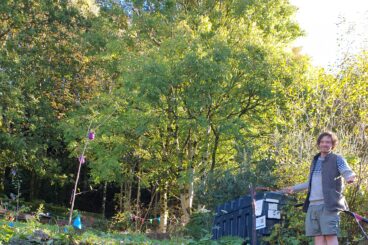
Over recent years, volunteer Peter McBride has devoted weeks to restoring a stretch of Victorian mileposts installed between Otter Ferry and Tighnabruaich in the 1870s.
Having cleaned and painted almost all of the cast iron markers, Peter came up against a problem: We don’t know how it happened, but sometime in the last 30 years the markers for miles 12 and 13 went missing. They may have been taken for scrap, or they could be sitting in someone’s garden as a souvenir. I looked into replacement metal markers, but the cost of making replicas was too much.
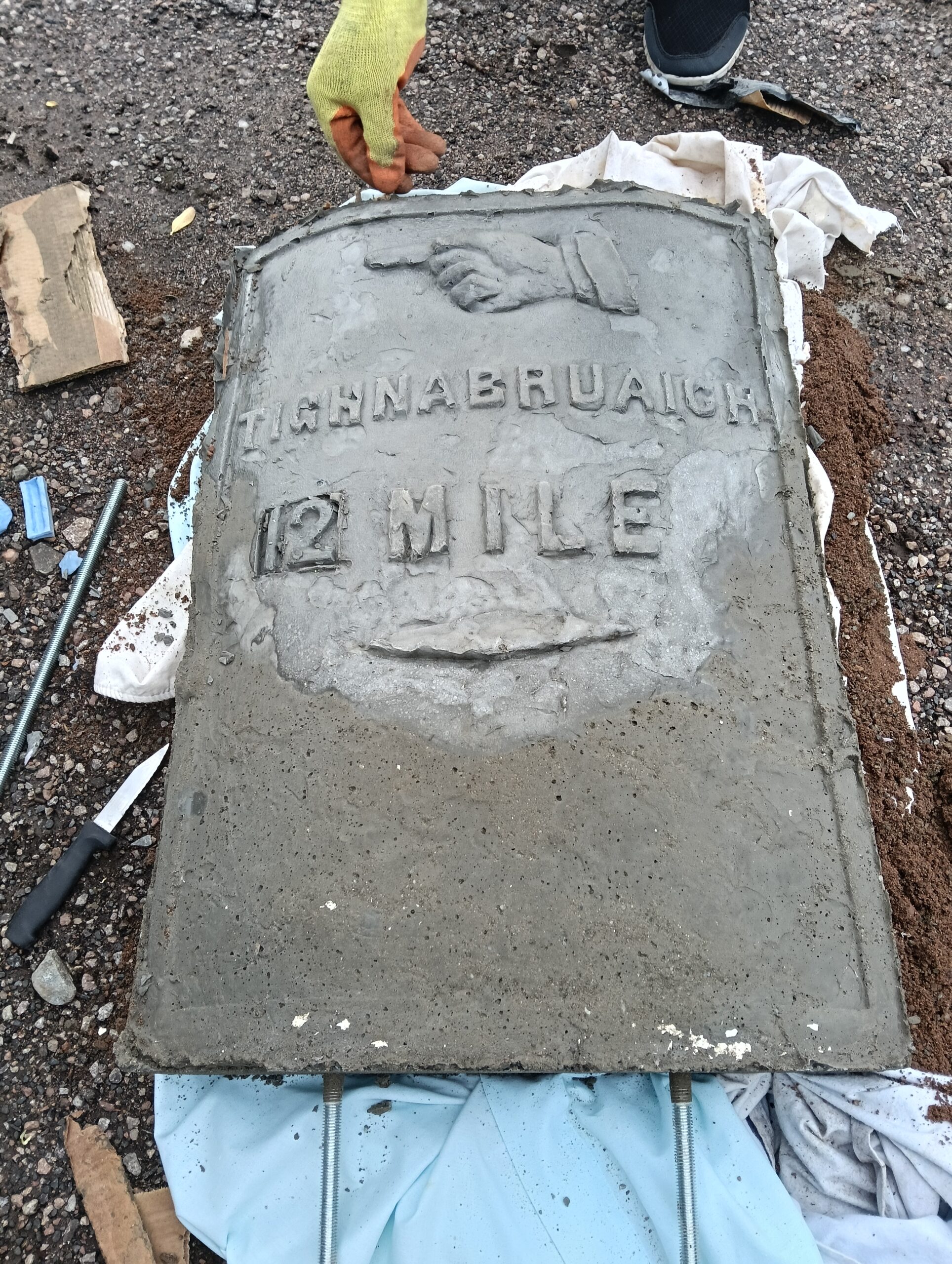
The board of the TDDT was able to assist with a grant for materials to make a mould of one of the existing markers. Peter and other volunteers researched a kind of silicone putty that is most often used for taking dental impressions.
For this job, the quantities were much larger, with 10kg used to make an exact copy. After filling the mould with concrete, the volunteers were delighted to see the new marker emerge. It will now be painted and installed at mile 12 before the marker for mile 13 is made in the same way.
Along the same route as the mile markers lie the ruins of the Milhouse gunpowder works. Andrew Macdonald and his family farmed in the area and, when they discovered an old cannon in their field, they quickly realised it had been used at the works to test the strength of the gunpowder.
The Macdonalds donated the cannon to the community, and it was set in a monument alongside a plaque commemorating those who had died in the dangerous business of making gunpowder.
Some years ago, a car accident levelled the monument and destroyed one of the old gateposts on the way to Cladh a Mhuilin cemetery.
Again, the development trust was able to fund the rebuilding of this unique local feature, and it was unveiled by Mr Macdonald, Roberta Wallace of the local Heritage Group, and some of the volunteers who had helped with the rebuild using traditional lime mortar and re-used stone.


Marking the miles across South West Cowal




Active Stories
- MP launches petition to fight four-year Rest and Be Thankful convoy plans
- Farm fires cost Scottish farmers almost £15 million
- Warning issued over ‘pink cocaine’ in Dunoon
- Cowal and Bute police report
- Dunoon police officer shortlisted for national community award
- Cowal sauna business celebrates as Argyll named UK stargazing hotspot
- A remarkable year for the Grand Old Lady of the Clyde
- Appeal for witnesses after two vehicles vandalised in Dunoon
- Field beans could help Scottish farmers cut fertiliser use and boost barley yields
- Storm-damaged Dunoon church spire set for repairs