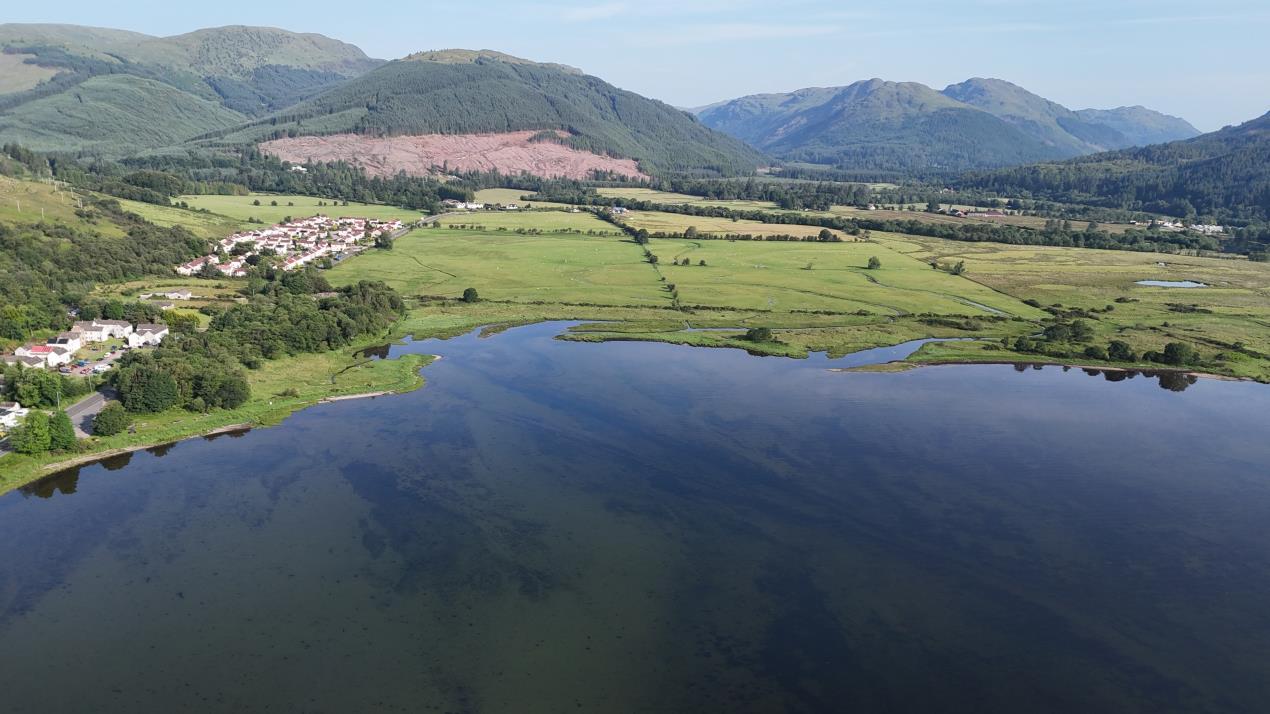
SEAGRASS ON the seabed of Holy Loch is staging an unexpected and remarkable comeback, according to a newly published report by a long-established scientific journal.
Once a rich and biodiverse marine habitat feeding into the Firth of Clyde, the loch was badly scarred in the mid to late 20th century by dredging and pollution linked to the former US Navy submarine base.
Chemical contamination — particularly copper and zinc — combined with agricultural and forestry run-off is believed to have wiped out much of the area’s seagrass.
Against this backdrop, the return of native seagrass is being hailed as a rare success story, especially at a time when seagrass meadows across the UK have been in steep decline, with estimates suggesting more than 90 per cent have been lost in the past century due to pollution, coastal development, anchoring, dredging and disease.
The comprehensive report in the Glasgow Naturalist, a journal published by the Glasgow Natural History Society, entitled ‘Natural regeneration of the seagrass Zostera noltii in the Holy Loch, Argyll, Scotland’ has been compiled by Dr Neil Hammatt and Phil Rawlins.
Dr Neil Hammatt, Holy Loch Nature Reserve warden and the report’s co-author, explained: “Seagrasses have a vital role to play in marine ecosystems. They stabilise sediments, cycle nutrients and provide a nursery habitat that encourages the repopulation of fish and invertebrates.
“Crucially, they also capture carbon which plays a major role in mitigating climate change.
“Since the base closed in 1992, the loch has experienced gradual ecological improvement, though no active restoration of seagrass has been undertaken.
“This report details the findings of a survey in mid- 2025 that identified natural regeneration of Z. noltii within the Holy Loch. The first few stems were noticed in2022.”
He added: “Since then, area expansion has occurred and beds have become denser. Most recent UK examples of seagrass growth have relied on planting efforts but this regeneration appears to be spontaneous and the discovery provides valuable information as to the conditions under which passive recovery may occur as well as underscoring the importance of protecting such areas.
“Approximately 20 hectares of loch bed were surveyed at low tide with types of sediment, vegetation cover and visible signs of seagrass presence recorded.
“Given the history of industrial contamination on Holy Loch, these findings are ecologically significant, and we suggest that dispersal from nearby lochs, such as Loch Long or Gare Loch via tidal currents may have contributed to the propagation.
“Ultimately, this is evidence of nature’s ability, when left to its own devices, to bounce back from environmental degradation and is good news when it comes to tackling climate change.”